Generac’s Amazon deal makes backup power the equity story
The Amazon supply agreement is large enough to reframe Generac: initial deliveries equal 57.0% of 2025 sales, before any upside from the wider warrant-linked spend target.
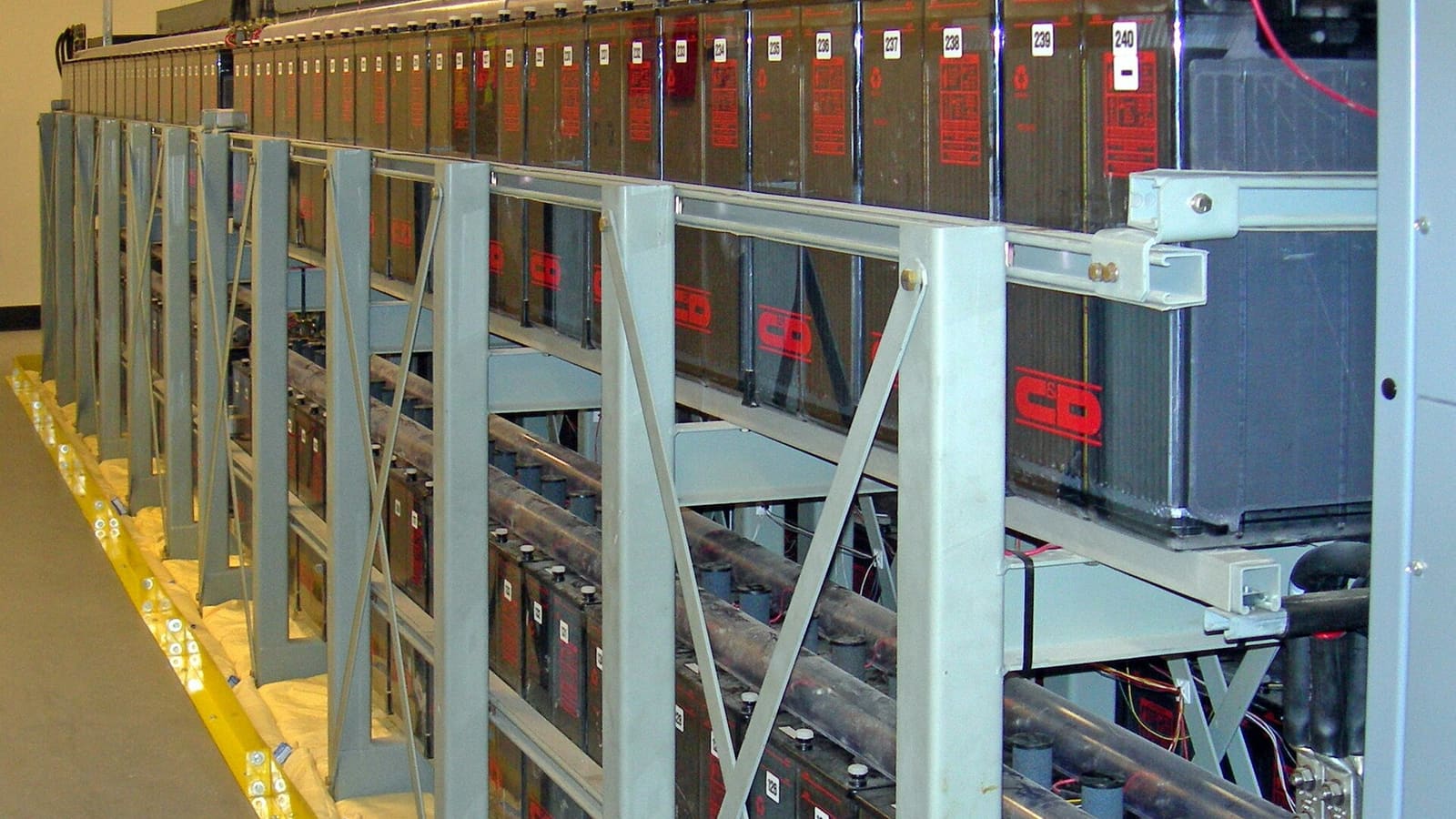
Generac’s Amazon agreement is not just another artificial-intelligence supply-chain headline. It changes the scale question around a company still widely associated with home standby generators. The thesis number is 57.0%: initial expected deliveries of $2.4 billion divided by Generac’s 2025 net sales of $4.209147 billion equals 57.0% ($2.400 billion / $4.209147 billion = 0.570, or 57.0%). That does not make the stock cheap or expensive by itself. It does make the company’s data-center exposure too large to treat as a side business.
Context
Generac filed an 8-K saying it entered a transaction agreement with Amazon and issued Amazon’s investment subsidiary warrants to acquire up to 1,693,745 Generac shares at an exercise price of $200.9266 per share. The same filing says initial backup-generator deliveries are expected to total $2.4 billion across 2027 and 2028, while warrant vesting is tied to aggregate gross payments from Amazon and affiliates of up to $8.0 billion.
The market reaction was visible because the agreement gives investors a clean way to underwrite one specific bottleneck in AI infrastructure: backup power. Data centers need chips, land, fiber, cooling, grid access, and capital. They also need reserve power that works when everything else is under stress. Generac’s filing supplies a concrete number where many AI-adjacent equity stories still rely on narrative.
The company was already leaning this way before the Amazon filing. In its second-quarter 2026 10-Q, Generac reported quarterly net sales of $1.173510 billion, compared with $1.061169 billion a year earlier. The increase was $112.341 million ($1.173510 billion - $1.061169 billion = $0.112341 billion), or 10.6% ($112.341 million / $1.061169 billion = 10.6%). Commercial and Industrial segment sales were $556.5 million, up from $430.6 million. That increase was $125.9 million ($556.5 million - $430.6 million = $125.9 million), or 29.2% ($125.9 million / $430.6 million = 29.2%).
The analysis
The first calculation is the cleanest one. Generac’s 2025 net sales were $4.209147 billion, which is the company’s reported $4,209,147,000 stated in billions ($4,209,147,000 / 1,000,000,000 = $4.209147 billion). The initial Amazon deliveries are $2.4 billion, or $2,400,000,000 stated in billions ($2,400,000,000 / 1,000,000,000 = $2.4 billion). Put those together and the announced initial delivery pool equals 57.0% of the last full-year revenue base ($2.4 billion / $4.209147 billion = 57.0%).
Annualizing the initial delivery window gives a second, more operating-oriented view. The filing points to 2027 and 2028, a two-year window. Dividing $2.4 billion by two years gives $1.2 billion per year ($2.4 billion / 2 = $1.2 billion). Compared with 2025 net sales, that annual run-rate equivalent is 28.5% ($1.2 billion / $4.209147 billion = 28.5%). That is why the story matters: even before considering other hyperscale customers, one named customer’s initial delivery schedule is almost three-tenths of the company’s prior annual sales base.
The larger vesting target is even more striking, but it is also less bankable. The filing refers to payments of up to $8.0 billion. That is 3.33 times the initial delivery amount ($8.0 billion / $2.4 billion = 3.33). Against 2025 sales, the full target would equal 190.1% ($8.0 billion / $4.209147 billion = 190.1%). This is not the same as saying Generac has won $8.0 billion of firm revenue. It says the warrant structure can continue vesting as Amazon-related gross payments rise toward that level.
The warrant math also matters because Amazon is receiving equity-linked economics. The total warrant shares are 1,693,745. Generac’s latest 10-Q said 59,006,361 common shares were outstanding as of the stated share-count date. On that base, the warrant shares equal 2.9% before issuance (1,693,745 / 59,006,361 = 2.9%). On a post-issuance denominator, they equal 2.8% (1,693,745 / [59,006,361 + 1,693,745] = 1,693,745 / 60,700,106 = 2.8%). If all warrant shares were exercised for cash at $200.9266, the exercise proceeds would be about $340.3 million (1,693,745 shares x $200.9266 = $340,318,424.12).
The immediately vested piece is smaller but still measurable. The filing says 307,954 warrant shares vested immediately. That is 18.2% of the total warrant package (307,954 / 1,693,745 = 18.2%). At the stated exercise price, the immediate tranche represents about $61.9 million of strike value (307,954 x $200.9266 = $61,876,150.18). The arithmetic shows the trade-off: Generac gets a large commercial relationship and potential cash exercise proceeds, while existing shareholders accept potential dilution linked to Amazon’s purchasing scale.
The margin question is the bridge from revenue to value. Generac’s second-quarter Commercial and Industrial adjusted EBITDA was $81.5 million on $556.5 million of sales, or 14.6% ($81.5 million / $556.5 million = 14.6%). Residential adjusted EBITDA was $215.4 million on $621.3 million of sales, or 34.7% ($215.4 million / $621.3 million = 34.7%). If data-center growth arrives at C&I-type margins, the revenue number can be large without carrying residential-style profitability. If scale, pricing, and factory utilization lift C&I margins, the operating leverage could be more important than the headline order size.
Risks and counterpoints
The central risk is that expected deliveries are not the same thing as realized revenue at attractive margins. The conclusion would be wrong if the $2.4 billion initial delivery expectation slips, is repriced, or converts with weaker profitability than investors assume. The assumption that takes the analysis down is simple: the Amazon demand must turn into recognized revenue without destroying C&I margin.
There is also concentration risk. A single hyperscale customer can validate a product line, but it can also gain bargaining power. The $8.0 billion upper reference point is useful for sizing the opportunity, but the reliable base case is narrower because the filing ties warrant vesting to future gross payments and says parts of the underlying agreements are redacted. Investors cannot audit all commercial terms from the public filing.
Execution is the other counterpoint. Backup power equipment is physical, working-capital-heavy, and exposed to component availability, labor, freight, and commissioning schedules. Generac had $1.2642 billion of liquidity at midyear, calculated as $264.9 million of cash plus $999.3 million of revolver availability ($264.9 million + $999.3 million = $1.2642 billion). That gives room, but it does not remove manufacturing risk.
What to do with it
For investors, the useful move is not to treat the announcement as a buy or sell signal. It is to update the checklist. First, track whether the $1.2 billion annualized delivery implication ($2.4 billion / 2 = $1.2 billion) begins to appear in backlog, C&I revenue, and customer disclosures. Second, compare C&I margins against the 14.6% second-quarter reference point ($81.5 million / $556.5 million = 14.6%). Third, watch dilution through the 1,693,745 warrant-share ceiling relative to the 59,006,361-share base (1,693,745 / 59,006,361 = 2.9%).
The open math says the Amazon agreement is big enough to re-rank Generac’s equity story. It does not say what the stock should be worth. The difference is the discipline: a 57.0% revenue-scale event ($2.4 billion / $4.209147 billion = 57.0%) is material, but the investment case still turns on execution, margins, and how much of the larger Amazon-linked payment target becomes real business.
Sources
Disclaimer. This is editorial analysis, not investment advice. No security mentioned here is an offer to buy or sell. Past performance does not guarantee future results — decide based on your own situation, time horizon and risk tolerance.

BlackMoney Desk
StocksWrites for BlackMoney. Open math, named risks, no hot tips.
Comments
0 commentsNo comments yet. Yours could be the first.